
A Pilgrim's Guide to the Stillsuits of Arrakis: From Scavenger to Batigh
xxx
The sun is a tyrant here, a molten god that bleeds the sky and bakes the stone. To walk the sands of Arrakis is to court a slow, desiccated death, a fate reserved for the foolish and the unprepared. Yet, we are not foolish. We are survivors, pilgrims in a world of endless thirst. Our salvation, our second skin against the devouring heat, is the stillsuit. It is not merely armor or gear; it is a covenant with the desert itself, a promise of life wrung from the very air we exhale and the sweat upon our skin. In the year 2026, as the struggle for the Spice and the soul of Dune continues in Dune: Awakening, the path of a survivor is measured by the suit they wear. From the humble beginnings of plant fiber to the legendary designs whispered of in sietch tales, each stillsuit is a chapter in our story, a testament to our resilience against the Shai-Hulud's domain.
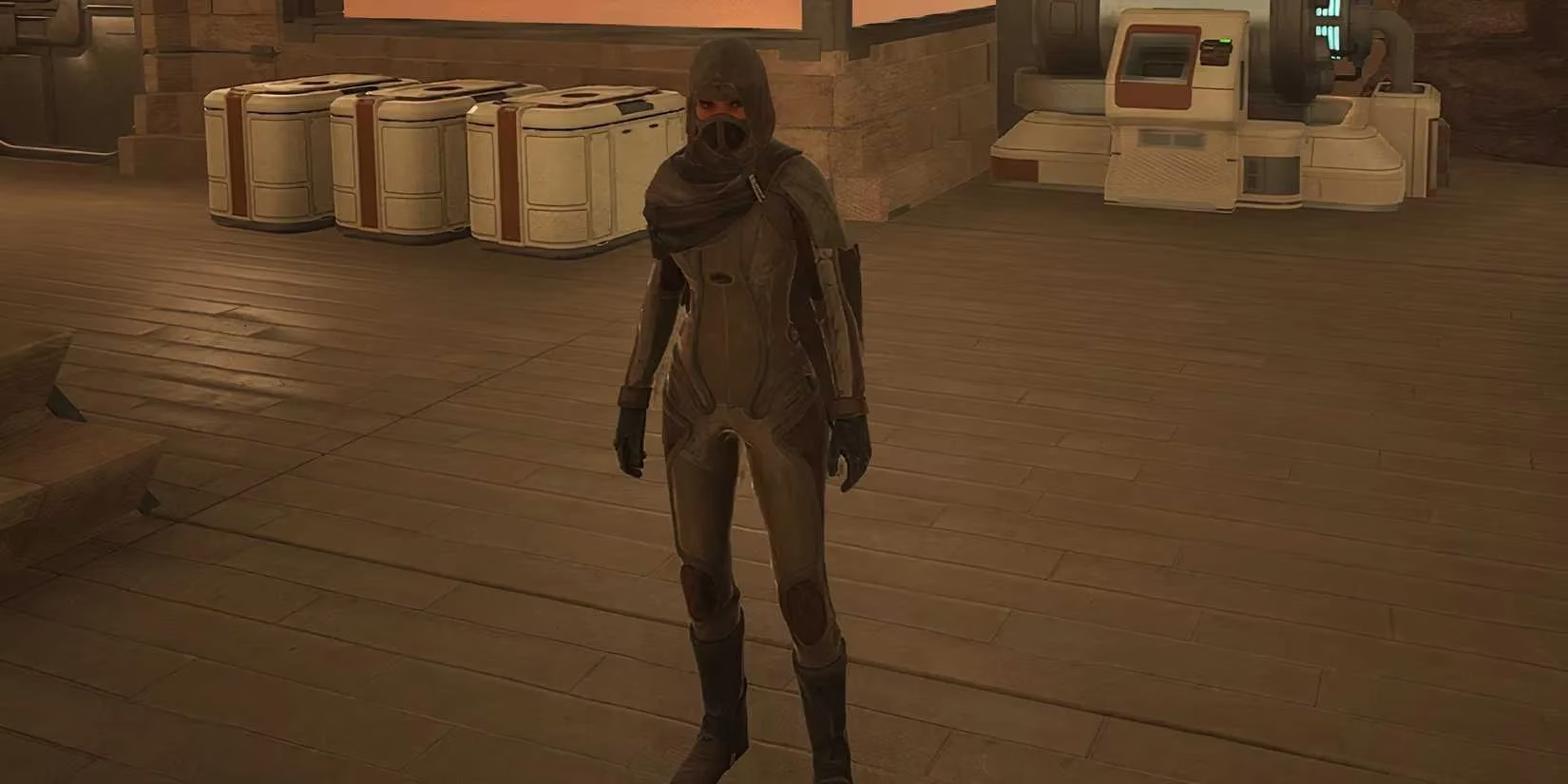
My own journey began with the Scavenger Stillsuit. It felt less like wearing armor and more like donning a brittle, hopeful shell. Woven from the hardy plant fibers that cling to life in the rock shadows and the ubiquitous Micro-sandwich Fabric pried from sealed cave entrances, it was my first lesson in Arrakeen alchemy. The quest 'Echoes of the Past' guided my hands at the General Fabricator, teaching me the sacred value of the moisture-sealed caves. The suit was fragile, its armor value a mere 6, its heat protection a scant 0.03, but its catchpocket—a 500-unit lifeline—felt like a universe of possibility. It was the suit of first breaths, of wide-eyed wonder tempered by the first, searing kiss of the open sun.
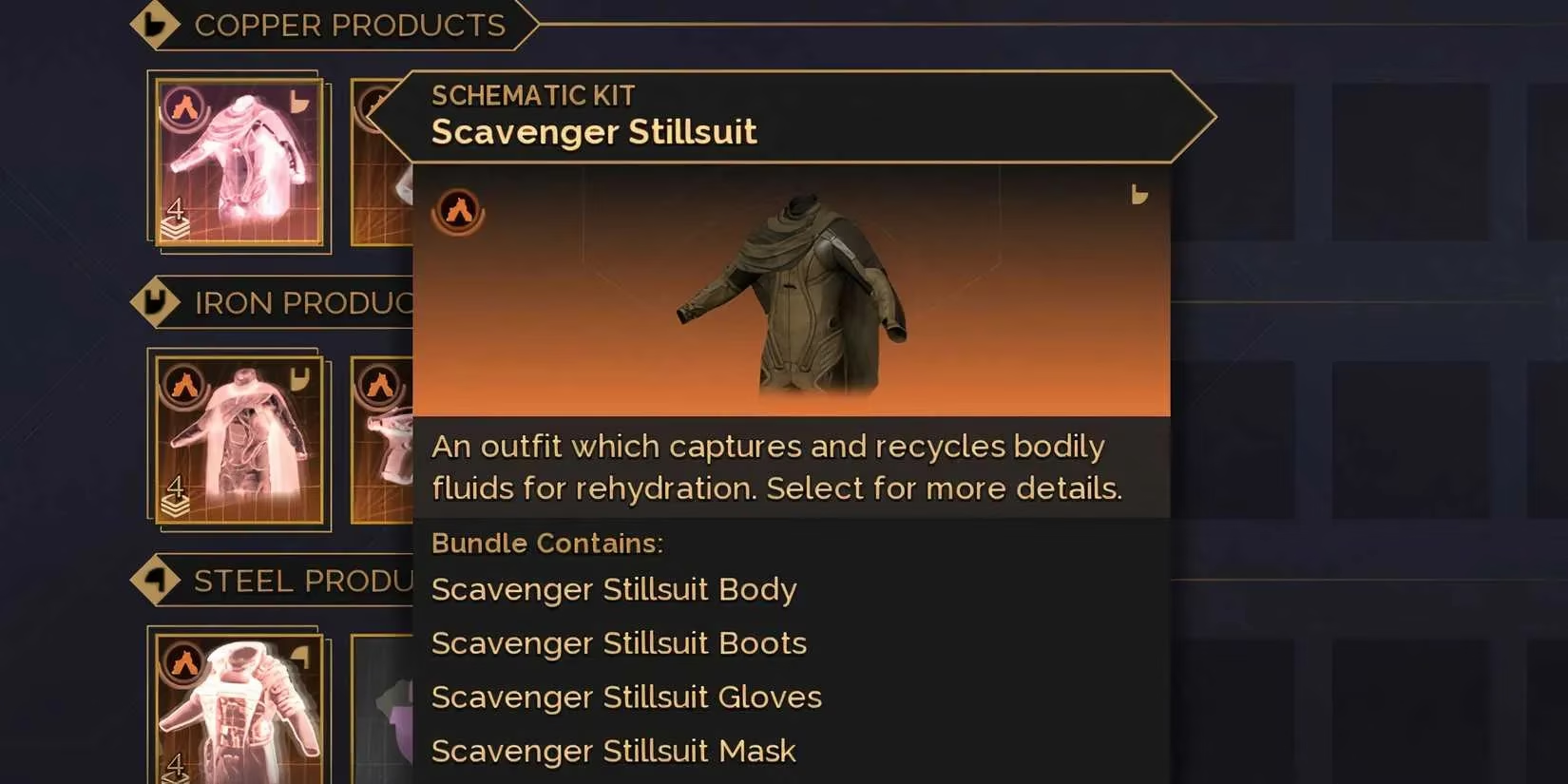
Progress, on Arrakis, is written in iron and sweat. As I ventured deeper into the Vermillius Gap, my hands grew calloused from mining, and my research tab blossomed with new, heavier knowledge. The Kirab Stillsuit schematic was my reward—a design stolen, or perhaps honed, by the ruthless bands of slavers and smugglers who haunt the dunes. It was a suit of grim practicality. Forging it required the new language of iron bars, adding a solid, unforgiving weight to the frame. The armor value climbed to 10, the heat protection to 0.05. Donning it, I felt less a scavenger and more a participant in the planet's brutal economy. It was a suit that acknowledged the violence simmering beneath the sand, a middle ground between survival and conquest.
| Stillsuit | Armor Value | Heat Protection | Key Material | Crafting Station |
|---|---|---|---|---|
| Scavenger | 6 | 0.03 | Plant Fiber, Micro-sandwich Fabric | General Fabricator |
| Kirab | 10 | 0.05 | Iron Bars, Micro-sandwich Fabric | Clothing Fabricator |
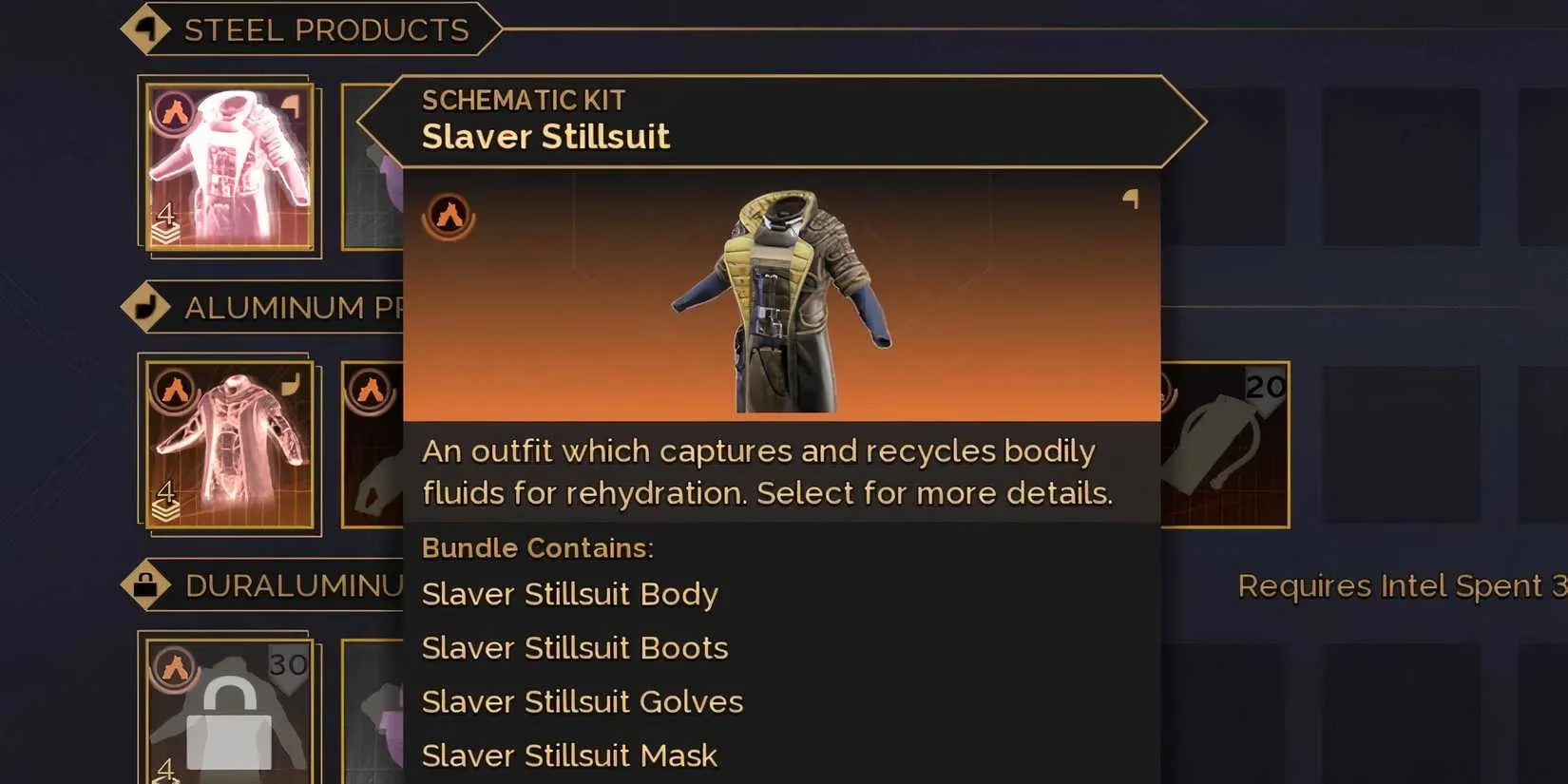
| Slaver | 15 | 0.06 | Steel Ingots, Silicone Blocks | Garment Fabricator |
Then came the grind for steel. The desert demands tribute, and for the Slaver Stillsuit, it was a hefty one. No longer content with simple fabrics and common ores, the recipe called for the fruits of advanced industry: steel ingots from the Ore Refinery and Silicone Blocks conjured from Flour Sand in the Chemical Refinery's belly. The Garment Fabricator hummed with a new, more sophisticated energy. This suit, with its 15 armor and 0.06 heat protection, marked a true departure. It was the uniform of an operator on Arrakis, someone who viewed the planet not just as a habitat, but as a system to be mastered and exploited. The weight of it was a promise—or a threat.
Yet, in quiet moments, watching the sunset bleed into the sand, I dreamed of the Fremen. The legends say they are gone, faded into myth, but their ghost lingers in the wind's whisper. The Native Stillsuit is the closest I have come to touching that legacy. It is a subtle evolution, a step beyond the slaver's crude power. Replacing steel with lighter, rarer aluminum and incorporating specialized Stillsuit Tubing, it felt... elegant. Its 23 armor and 0.9 heat protection were not just numbers; they were a philosophy. To reach the aluminum deposits far to the north, I had to trust my bike and later my 'thopter, leaving the familiar badlands behind. This suit was for the explorer, the one who seeks not just to survive the desert, but to understand its vast, silent language. It whispered of deeper truths, of a harmony with Dune that the off-world corporations could never purchase.
The path then forked between power and purpose. For those who sell their blade, the Mercenary Stillsuit beckoned. Its defining trait was sheer, unsubtle durability—a staggering 35 armor value—while maintaining a respectable 1.2 heat protection. Crafting it was an exercise in advanced metallurgy, transforming aluminum and elusive Jasmium Crystals into Uraluminum ingots within the heart of a medium refinery. This was the suit of the professional combatant, the hired gun who walks the line between the need for mobility in battle and the imperative of desert survival. It spoke of contracts fulfilled and credits earned, a pragmatic armor for a pragmatic existence.
But the shadow of the Combine Honnete Ober Advancer Mercantiles—CHOAM—looms large over all commerce, even the commerce of survival. Their corporate stillsuit is a masterpiece of sanctioned, profit-driven engineering. With an armor rating of 45 and 1.5 heat protection, it is objectively superior to the mercenary's gear. Its soul is plastanium, a futuristic alloy born from titanium and stravidium fiber in the colossal belly of a large ore refinery. To wear the CHOAM suit is to declare oneself a pillar of the galactic economy, an agent of the most powerful force in the known universe. It prepares one for the endgame, for ventures into the Deep Desert where the spice flows thick and the dangers are existential. It is ultimate protection, for a price that is more than just materials—it is allegiance.
And then, there is the grail. Not found in a vendor's stall in Sentinel City for a king's ransom of Solaris, but earned through knowledge, patience, and a profound connection to the planet itself. I speak of the Batigh Stillsuit. To unlock it is to walk the Path of the Planetologist, to learn from the ghost of Dr. Kynes through his colleague, Derek Chinara. It is a journey of a hundred steps, culminating in the quest 'The Final Piece.' The reward is not just a schematic; it is an inheritance.
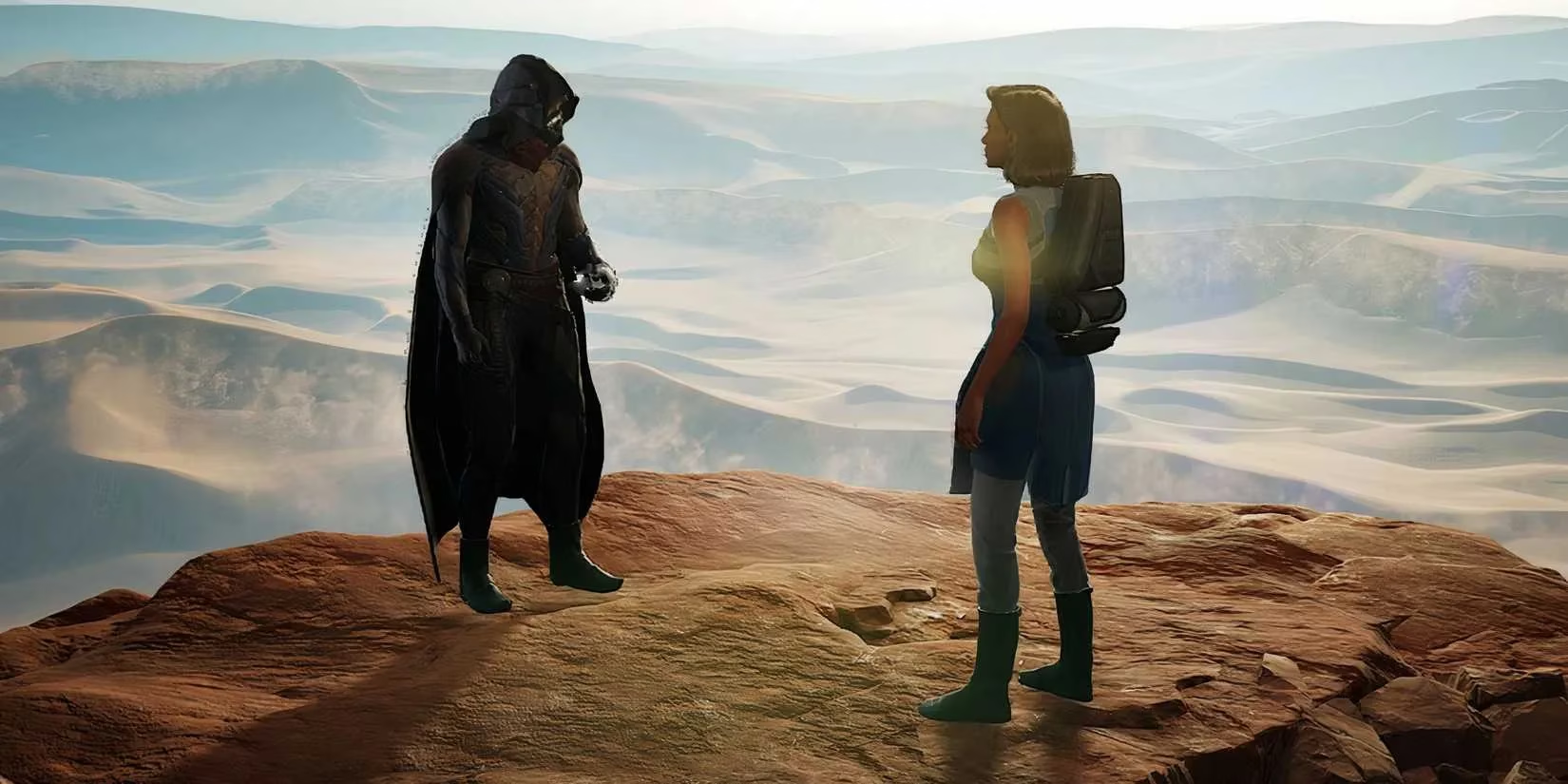
Crafting the Batigh is the final alchemy. It demands Duraluminum Ingots and the rarest of all substances: Spice-infused Duraluminum Dust. This is no mere suit; it is a symbiosis. Its stats are legendary—184 armor, 1.2 heat protection—but they tell only half the story. To wear it is to feel the pulse of Arrakis in its very threads. It is the stillsuit that Dr. Kynes envisioned, a perfect marriage of off-world technology and deep ecological wisdom. It is armor fit for a prophet, a leader, or perhaps, for one who would truly walk without rhythm to avoid the worm.
So here I stand, in the year 2026, looking back at the skins I have shed. Each stillsuit was a phase of my life on this golden, deadly world:
-
🏜️ The Scavenger: For the first, trembling steps.
-
⚙️ The Kirab: For embracing the grind.
-
🔗 The Slaver: For mastering basic industry.
-
🌅 The Native: For seeking deeper understanding.
-
⚔️ The Mercenary: For the professional survivor.
-
🏢 The CHOAM: For the corporate endgame.
-
✨ The Batigh: For becoming part of Dune's dream.
They are more than equipment slots on a character sheet. They are my history, written in fabric, metal, and spice. They are the layers between my flesh and the devouring sun, between my hope and the endless sand. In Dune: Awakening, your stillsuit is your story. Choose the skin that fits your soul, for on Arrakis, survival is just the beginning. The real journey is in what you become while clothed in the desert's own reluctant gift.