
Blades in the Sand: A Weaver's Journey Through Early Dune: Awakening Armaments
Mastering the art of survival in Dune: Awakening begins with crafting essential blades like the Kindjal dagger, transforming scrap metal into powerful weapons to conquer the brutal sands of Arrakis.
I walked the sands of Arrakis, a planet of whispers and steel, where survival is a craft as delicate as it is brutal. In my hands, the weight of metal felt like a promise, a pact with the desert itself. Gurney Halleck's old adage, "The slow blade penetrates the shield," echoed in the stillness, a truth that turns every scavenged piece of scrap into a potential lifeline. My journey from a helpless survivor to a weaver of blades began not with grandeur, but with necessity, learning that in Dune: Awakening, a well-crafted edge is more than a tool—it is an extension of one's will against the unyielding dunes.
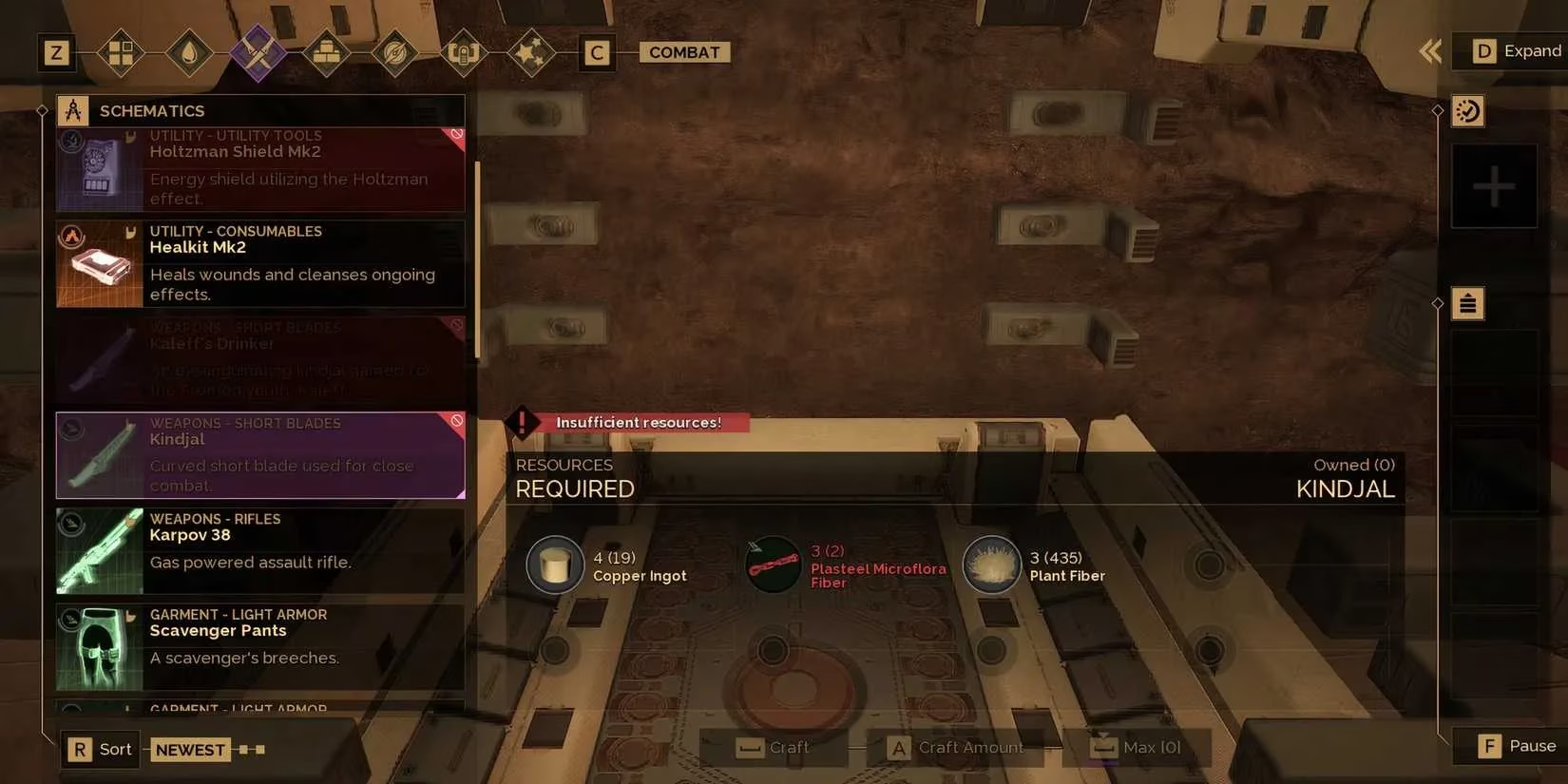
The first true companion I forged was the Kindjal. Its design was simple, yet in its curve, I saw the beginning of my path. The Fabricator hummed, transforming humble plant fiber and copper ingots into something deadly. The true hunt, however, was for the elusive Plasteel Microflora Fiber, a material that whispered of deeper secrets within scavenger caves and forgotten bandit camps. With a mere investment of Intel, the schematic became mine, and with it, the power not just to create, but to sustain. This dagger was my first teacher: patience in crafting, ruthlessness in application.
My earliest memory is not of a crafted blade, but of a desperate act of creation. Amidst the wreckage of my landing, with nothing but the scorching air and my own fear, I bent pieces of scrap metal into a crude knife. It was a testament to pure survival.
-
Damage: A mere 5.5, a scratch more than a cut.
-
Speed: 139, a frantic, desperate rhythm.
I knew I would discard it for finer tools, yet I always kept one tucked away—a humble reminder of where I began, and a silent spare for when better blades inevitably failed. It was the soul of Arrakis made manifest: unforgiving, temporary, but utterly essential.
As my understanding grew, so did my ambitions. I sought the designs of the great Houses, starting with the brutal elegance of the Harkonnens. The Artisan Dirk was a leap into a darker artistry.
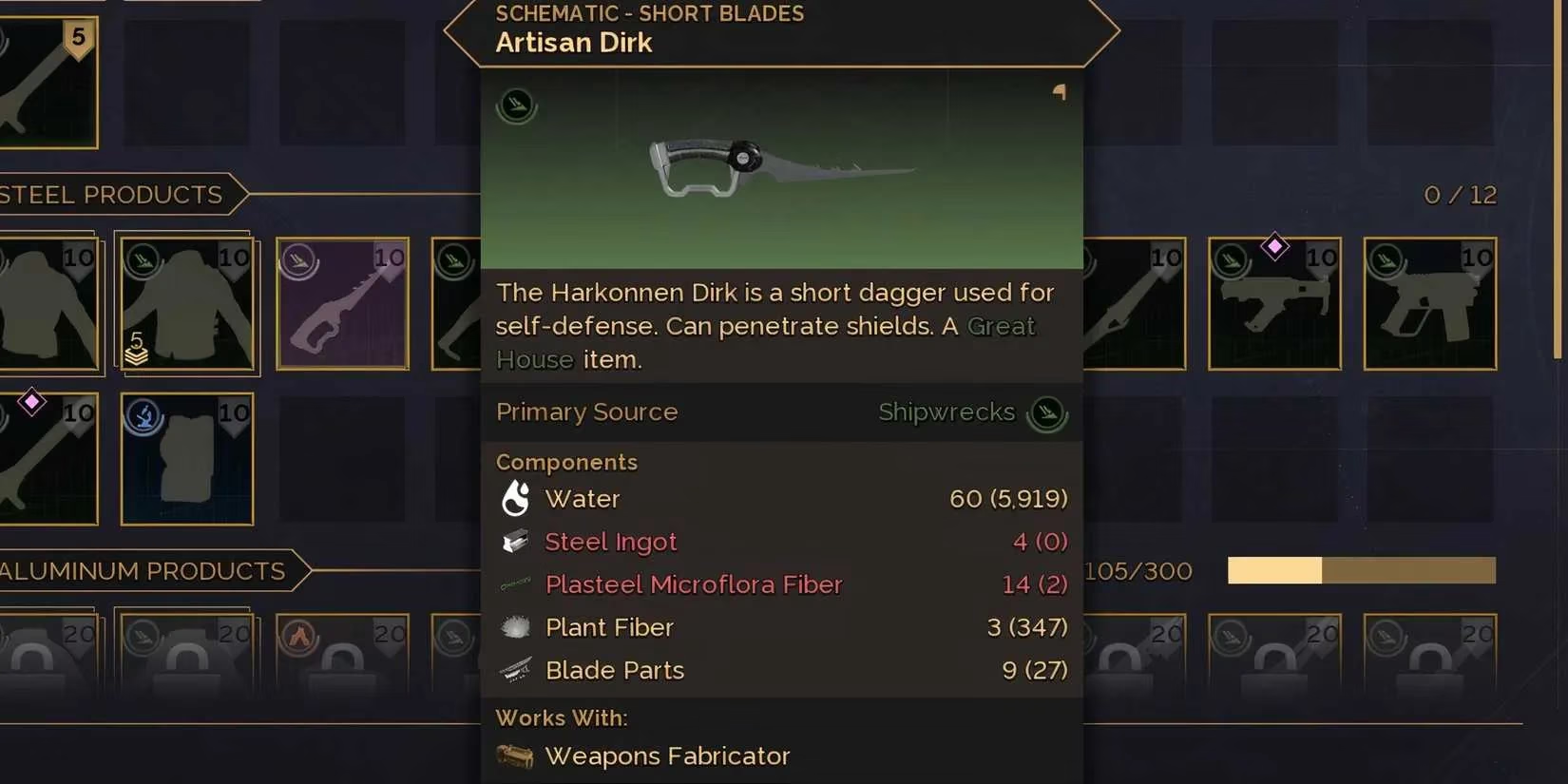
Gathering steel ingots and blade parts from the world's lower levels was a pilgrimage. This weapon, with its formidable 16.4 damage, was not for duels of honor. It was for the quick, messy finality that the desert demands—a defender's tool that left no room for a second strike. It taught me that a weapon's purpose is etched into its very form.
The day I unlocked the Standard Sword felt like a graduation. Its cost was steep—10 precious Intel points—but it promised a new language of combat. Heavier, slower at 105 speed, it traded the dagger's frantic staccato for a sweeping, authoritative cadence.
| Ingredient | Common Source |
|---|---|
| Iron Ingots | Mined and refined |
| Plasteel Microflora | Shipwrecks, Imperial Testing Stations |
| Blade Parts | Intel locations, scavenger outposts |
To hold it was to understand control. It could dance through multiple foes where a dagger could only pick its target, its 9.9 damage landing with a satisfying, crushing weight. This was the weapon of someone who planned to hold ground, not just survive it.
Returning to the Kindjal form with the Artisan Kindjal was like reuniting with an old friend who had mastered terrible new skills. Favored by House Atreides, it was a statement of refined principle against Harkonnen brutality. The recipe sang of progress: steel instead of iron, carbon ore added to the mix.
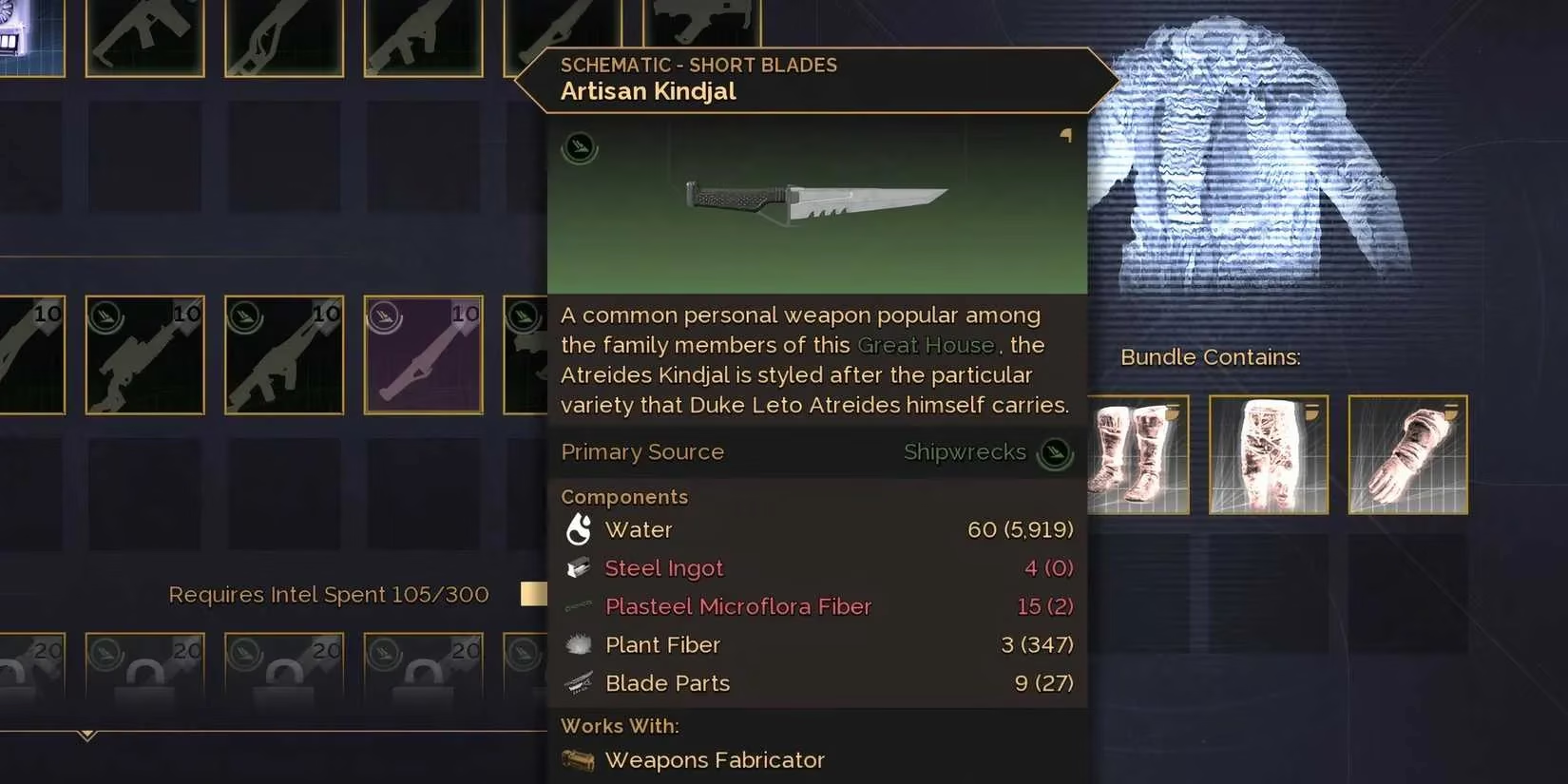
It moved with the same 139 speed, but where my first Kindjal whispered, this one screamed, dealing 16.4 damage. It was proof that evolution does not always mean change in form, but a profound deepening of essence. The familiar grip now held twice the promise of death.
The apex of this early craft, the weapon that felt destined for the hands of Swordmasters, was the Artisan Sword. It was elegance given an edge. Almost identical in recipe to the Standard Sword, save for the crucial substitution of steel for iron, it represented the peak of what I could weave from the desert's bounty.
-
Damage Output: A staggering 18, more than double its standard predecessor.
-
Investment: Another 10 Intel, a gamble that paid in confidence and cleaving power.
To swing it was to understand precision. It demanded a different skill, a calm center within the storm of battle. It was no longer just about hitting; it was about striking exactly.
Yet, among these weapons of war, one blade held a different kind of legend. Kaleff's Drinker was a story I hunted for. Its damage was a modest 10, but its purpose was transcendent efficiency and a grim practicality. The tale spoke of Kaleff, a Fremen who held off Sardaukar with this very knife. Its true magic, however, was in its ghastly function: exsanguination.
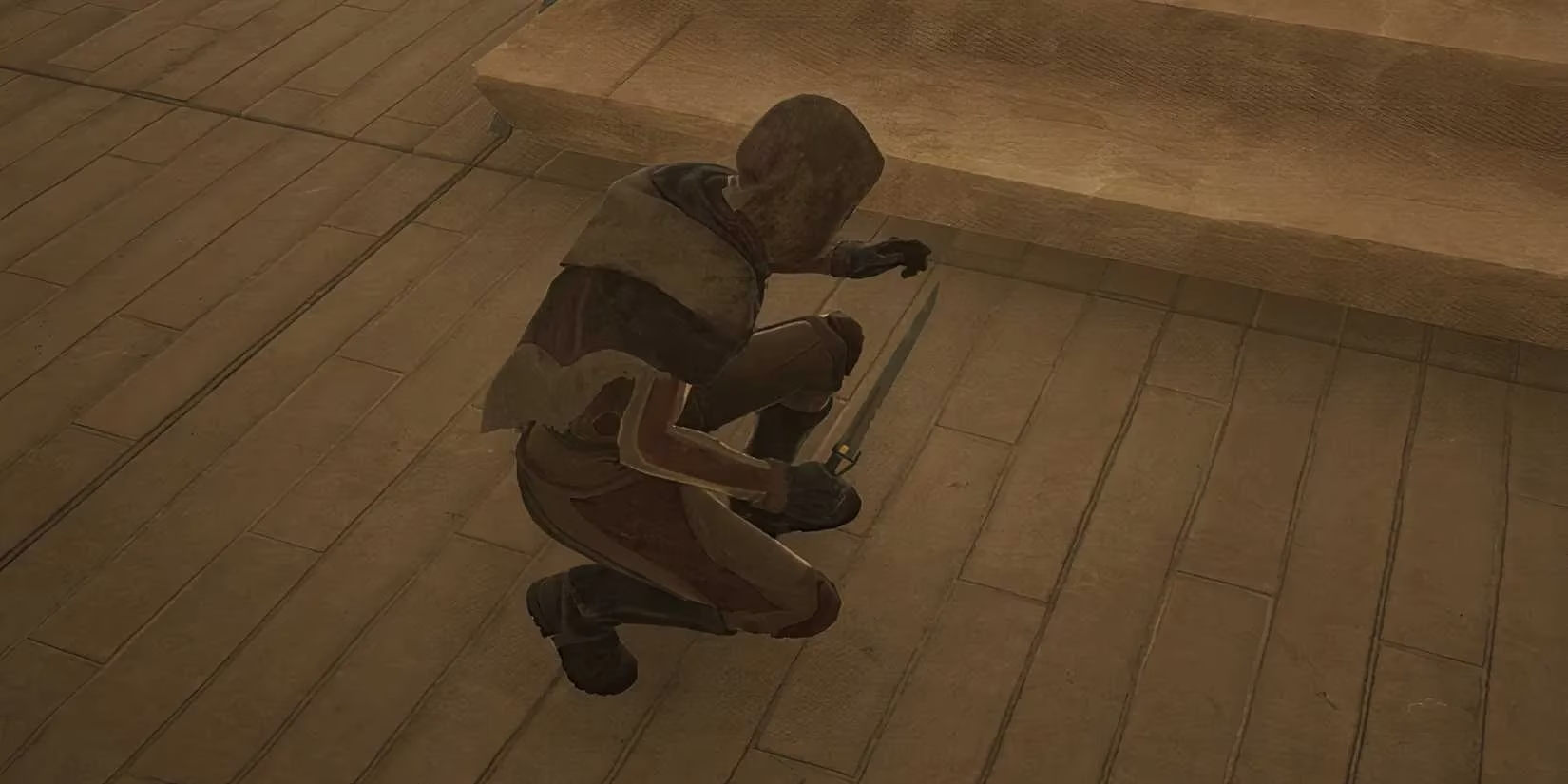
In those early, parched days of 2026, where every drop of water was a triumph, this blade did not just take life—it preserved the essence of it, storing blood for later reclamation. Crafting it required a pilgrimage for Copper-infused Dust in the deep wilderness, but the reward was a tool that changed the very equation of survival. It was a brutal poem to the Fremen way: nothing is wasted, especially not the life you take.
From scrap metal to steel, from survival to style, each blade I crafted wrote a line in my story on Arrakis. They were more than inventory; they were chapters. The Kindjal was my prologue, the Swords my rising action, and Kaleff's Drinker a stark, beautiful refrain on the nature of this world. I learned that to craft a weapon here is to converse with the desert—to take its scattered secrets and forge them into a will that can, indeed, be slow enough to penetrate any shield.