
Dune: Awakening in 2026: No Subscription, No Early Access, Plenty of Spice
Dune: Awakening's sane business model and post-launch plans promise no early access, no subscription, and free updates.
As of 2026, Dune: Awakening has long since crawled out of the sand and into players' libraries, but the business-model pitch Funcom made before launch still deserves a look—mostly because it was refreshingly sane in a sea of early-access cash grabs. The short version: no early access, no monthly subscription, and regular free updates. In an industry where 'live service' sometimes means 'please keep paying forever,' that combination is rarer than water on Arrakis. 🌵
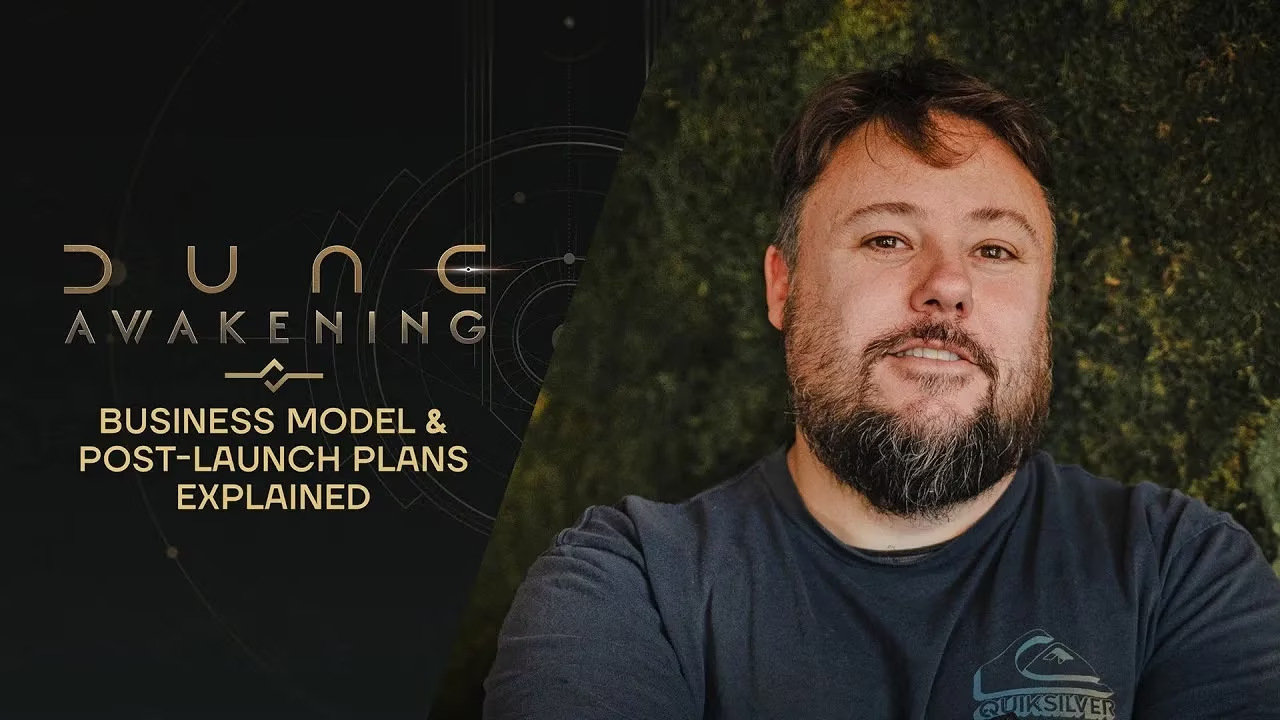
Funcom's creative director Joel Bylos spelled out the plan in a pre-launch video. The key promises were that the game would not launch in early access, would not carry a monthly sub, and would receive regular free updates with new content, features, and quality-of-life improvements. Paid DLC would exist—available individually or through a season pass—but it would be optional, and players would not hit a paywall before finishing the main story. For anyone who has been burned by a 'deluxe edition' that hides the good bits, that is a welcome change of pace. No Jabba-the-Hutt-style mission locked behind a special edition here, thank goodness.
The no-sub promise was especially notable because the game had been billed as an MMO, a genre where monthly fees used to be as common as sand. Funcom instead pitched a complete game at launch—which apparently counts as a novelty now—and let players decide later whether the extra DLC was worth their hard-earned spice. At the time, pre-orders started at $49.99, which in 2026 looks almost quaint. No $70 standard edition, no mandatory battle pass, no subscription ball and chain. The proof, as always, is in the pudding—or in this case, the sand.
The launch-day system requirements were also on the sensible side, though one line on the store page caused a double take:
| Component | Minimum | Recommended |
|---|---|---|
| OS | Windows 10 or newer | Windows 10 or newer |
| CPU | Intel Core i5-7400 or AMD Ryzen 3 1200 | Intel Core i7-10700K or AMD Ryzen 5 2600X |
| GPU | Nvidia GeForce GTX 1060 (6GB) or AMD Radeon 5600XT (6GB) | Nvidia GeForce RTX 3070 (8GB) or AMD Radeon 6700XT (12GB) |
| RAM | 16GB (the page said 16MB, which is hilarious) | 16GB |
| Storage | 60GB | 75GB |
Unless Funcom had discovered a way to compress the entire known universe into a floppy disk, 16MB of RAM was obviously a typo. Assume 16GB and move on. The rest of the specs are friendly enough for a 2026 rig, and a free demo with a character creator and benchmark mode gave curious players a way to test the waters without committing. That demo was a smart move: nothing says 'trust us' like letting players see their frame rate before they spend their money.
Early previews were also encouraging. PC Gamer's Joshua Wolens praised the game for balancing survival mechanics with exploration and combat, noting that even in a brief session his increases in power felt steady and meaningful. By the end, he was whipping across the desert on a sandbike and headshotting enemies with an Atreides rifle, and he felt like Lisan al Gaib himself. That is a pretty strong endorsement from someone who has presumably not actually ridden a sandbike in real life. 🏍️

Of course, a launch promise is one thing and a post-launch reality is another. By 2026, the big question is no longer whether Dune: Awakening would avoid early access—it did—but whether the free updates and optional DLC have kept the spice flowing. Funcom's model was designed to avoid splitting the player base with a subscription or a paywalled main story, and that remains a smart play for a survival game that wants people to stick around. Paid expansions can be a nice little earner, but only if the base game feels complete. No one wants to buy a season pass and discover the first chapter is a tutorial and the second chapter is a loading screen.
All told, Dune: Awakening's pre-launch pitch was a breath of fresh air: a full launch, no monthly fee, free updates, and optional DLC. In 2026, that sounds less like a marketing gimmick and more like a blueprint other studios should study. The spice must flow, but the subscription does not have to. 🐛