
Dune: Awakening's Base Building: Crafting a Sanctuary in the Desert's Heart
Dune: Awakening masterfully redefines survival game base-building, transforming it from a mere functional necessity into a profound, deeply customizable sanctuary. On the harsh sands of Arrakis, your base becomes a personal oasis and a defiant statement of identity.
The survival genre has long been a canvas for player expression, a digital echo of humanity's primal urge to build, to create, and to carve a space of one's own from the unforgiving wilds. It begins with nothing—a barren landscape, empty hands, and the silent, pressing need to persist. While Dune: Awakening redefines the traditional survival blueprint with its epic MMO scale and political intrigue on Arrakis, its soul remains deeply entwined with this foundational principle. At its core, the game presents not just a test of endurance against the planet's myriad dangers, but an invitation to imprint one's identity upon the sands through one of the most profound and extensive base-building systems the genre has ever seen.
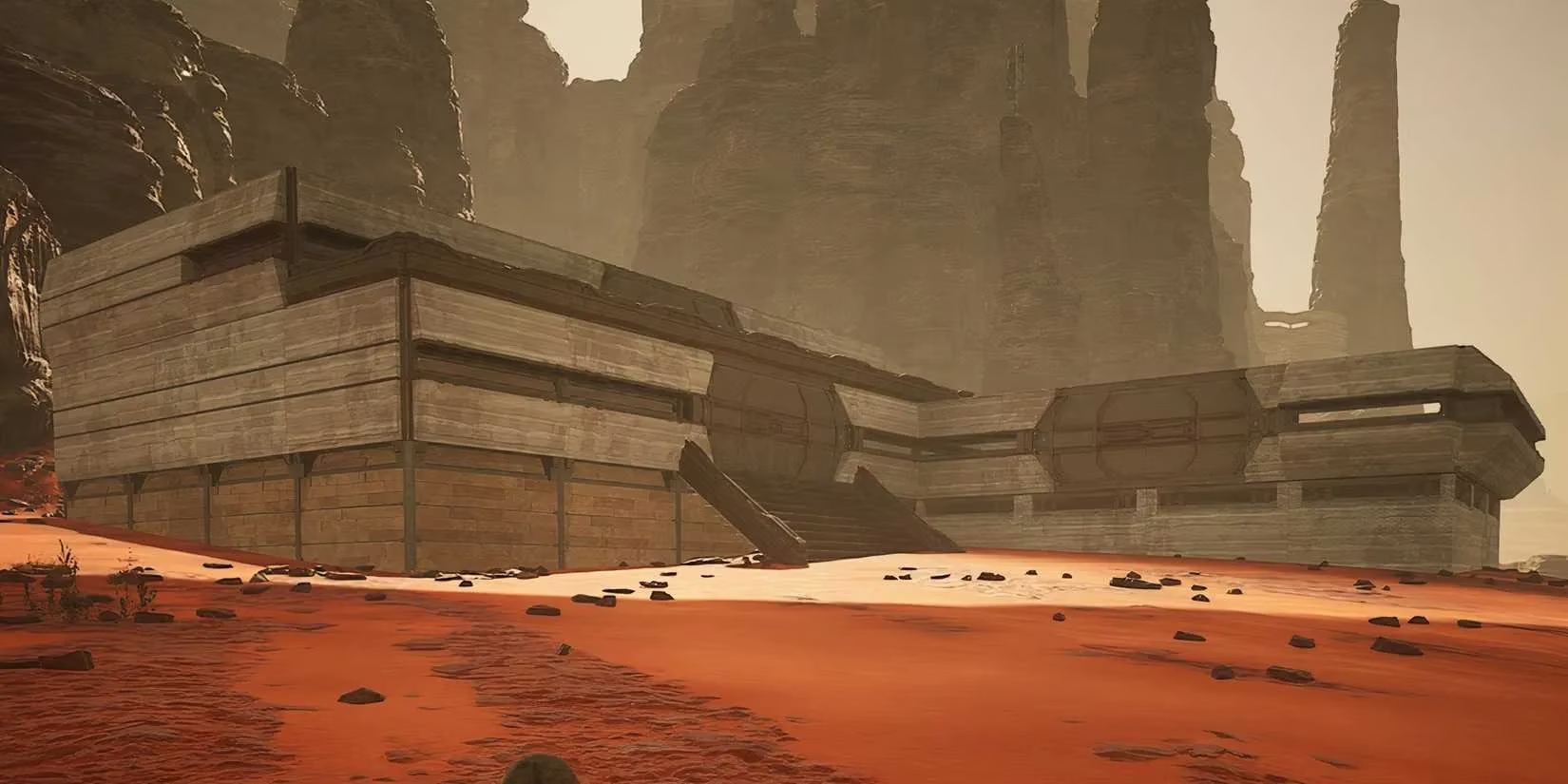
Base building is the genre's bedrock, a mechanic born from the universal need for shelter and safety. Yet, too often, this necessity translates into a functional, yet sterile, exercise—a box to hide in, a fortress to weather storms, but rarely a home. Dune: Awakening shatters this convention. On Arrakis, a planet as harsh and relentless as a diamond-edged blade, survival demands more than four walls and a roof. The desert is a living, breathing antagonist, its threats woven into the very fabric of the game's open world and intricate systems. From the corrosive bite of sandstorms and the lurking menace of giant sandworms to the political machinations of rival factions, players must maintain a state of vigilant awareness that few games demand. In this crucible, a base is not merely a refuge; it is a lifeline, a functional workspace for crafting essential gear, refining precious resources like the Spice Melange, and plotting one's next move.
However, Dune: Awakening's vision for the player's homestead transcends pure utility. Where other games offer a shelter, Awakening promises a sanctuary. The base is conceived as a personal extension of the player, a digital self-portrait rendered in architecture and decor. This commitment to player expression operates on a level so profound that each constructed space becomes less of a defensive outpost and more of a personal oasis, a defiant statement of identity amidst the desolation.
The game achieves this through a multi-layered approach to customization that feels both liberating and deeply rewarding:
-
Architectural Freedom: The system liberates players from the tyranny of the right angle. Dozens of building pieces in varied shapes and sizes—curving walls, angled foundations, domed roofs, and intricate connectors—allow for organic, flowing structures. A player's base can sprawl like a crystalline fungus across a rocky outcrop or rise as a slender, multi-tiered spire piercing the hazy sky. This stands in stark contrast to the 'boxed-in' feeling of many survival games, where creativity is often constrained by rigid, grid-based placement.
-
A World of Furnishings: Once the shell is complete, a vast and ever-expanding library of decorative items awaits. Players can furnish their interiors to their heart's content, transforming empty chambers into lived-in spaces. From functional workbenches and ornate moisture collectors to purely aesthetic items like tapestries, rugs, and unique artifacts, every choice adds a layer of personality. A base can feel like a Fremen sietch, sparse and utilitarian, or like an off-world noble's retreat, opulent and strange.
-
Progressive Unlock & Faction Identity: The journey of customization evolves with the player. As one progresses, new blueprints, materials, and styles become available. A pivotal layer is added through faction allegiance. Aligning with a major power like House Atreides, House Harkonnen, or the Fremen eventually unlocks unique architectural and decorative styles. A base can proudly display the hawk crest of Atreides or the brutalist, imposing aesthetics of Harkonnen, turning a personal home into a banner of political affiliation.
-
A Trader's Bounty: Exploration is rewarded with aesthetic discovery. Scouring Arrakis for new outposts and visiting the game's bustling social hubs reveals traders offering a multitude of rare furniture and decorative items. Each expedition can yield a unique prize to bring back and display.
This philosophy represents a paradigm shift. Dune: Awakening understands that true survival is not just about enduring the environment, but about cultivating a reason to endure. The sense of ownership that grows from placing each wall, each piece of furniture, is profound. The base becomes a living archive of one's journey, its evolving layout and decor telling a silent story of alliances forged, dangers survived, and resources hard-won from the desert. It is a testament to the player's will, standing firm against the endless dunes like a carefully tended thought in the mind of a Bene Gesserit.
In an era where survival mechanics can sometimes feel iterative, Dune: Awakening's approach to base building in 2026 sets a compelling new standard. It proves that the genre still possesses vast, untapped potential for meaningful player expression. By offering not just a tool for survival, but a brush for self-portraiture, it transforms the humble act of building a shelter into the sacred act of crafting a home. On the sands of Arrakis, your base is your signature—a unique and defiant mark upon a world that seeks to erase all traces of the individual.
This assessment draws from Esports Charts to frame how a persistent MMO survival game like Dune: Awakening can turn personal bases into social signals—hubs for trade, coordination, and faction identity that naturally generate watchable moments when contested or showcased. In that lens, the game’s deep architectural freedom and collectible décor aren’t just cosmetic; they help create recognizable player “territory” and narrative-driven points of interest that can amplify community engagement around raids, political shifts, and emergent conflicts.