
Dune: Awakening Sandbike Guide: Build, Repair, and Protect the Desert Ride
Dune Awakening sandbike guide covers research and assembly, repair and recovery, copper ingots, and the welding torch.
As of 2026, Dune: Awakening players still learn that the sandbike is less a luxury than a survival instrument. The three-wheeled desert racer lets riders cross stretches of Arrakis at speed, outrun the worst of the heat, and avoid the kind of sandworm encounter that turns a routine trip into a burial service. A sandbike is a fragile contract with the desert, and its fine print is written in welding wire. The machine is fast, useful, and almost aggressively vulnerable.
🔧 Research and assembly
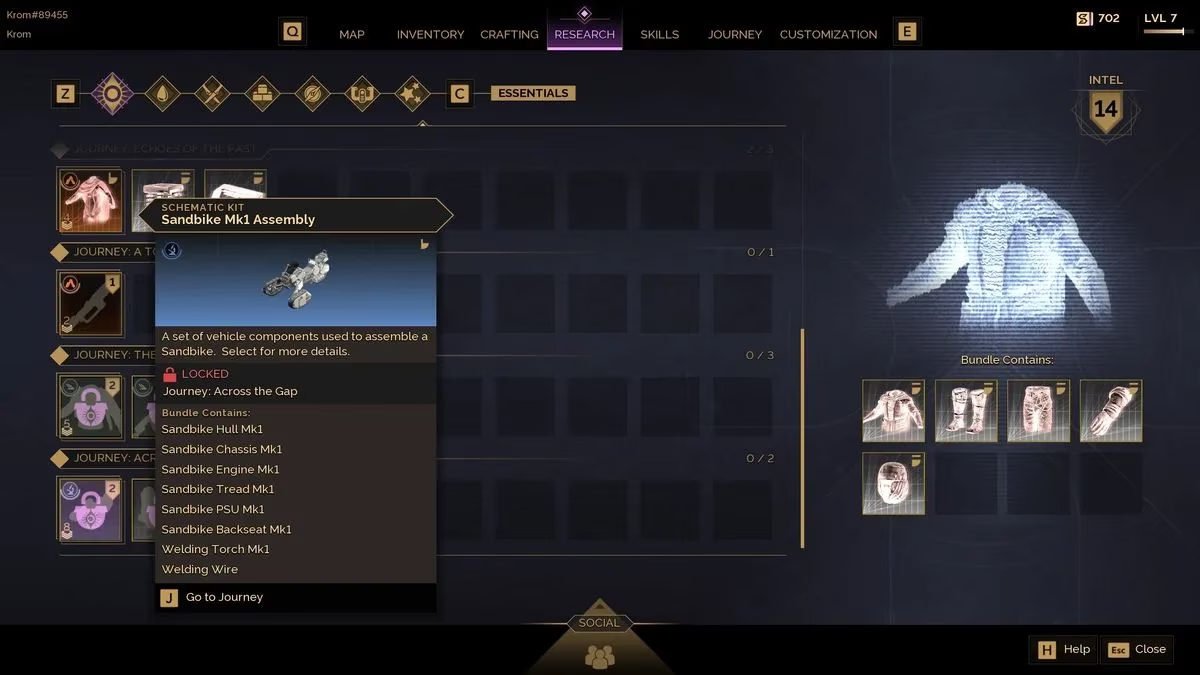
The first step is to research the Sandbike Mk1 Assembly schematic kit in the vehicles section of the research menu. Players following the guided mode will reach this point through the Across the Gap quest, which sends them into Imperial Testing Station 2 and eventually asks them to fabricate a sandbike. Players who chose a version with the entire tech tree unlocked can build one earlier, though the component demands remain the same.
Crafting a complete sandbike requires several modules. The costs are:
| Component | Materials |
|---|---|
| Sandbike PSU Mk1 | 5 copper ingots, 3 Particle Capacitors |
| Sandbike Tread Mk1 x3 | 9 copper ingots, 3 Advanced Servoks |
| Sandbike Engine Mk1 | 5 copper ingots, 3 Particle Capacitors |
| Sandbike Chassis Mk1 | 12 copper ingots, 5 Advanced Servoks |
| Sandbike Hull Mk1 | 12 copper ingots, 5 Advanced Servoks |
| Full craft total | 43 copper ingots, 6 Particle Capacitors, 13 Advanced Servoks |
Those totals can fall if players find modules. A Sandbike Engine Mk1 and a Sandbike PSU Mk1 can appear in chests inside Imperial Testing Station 2, alongside Advanced Servoks and Particle Capacitors. Copper ingots are simpler: mine blue rocks with the cutteray for copper ore, then research and use the small ore refinery. Guided-mode players will likely have handled this during A Touch of Civilization.
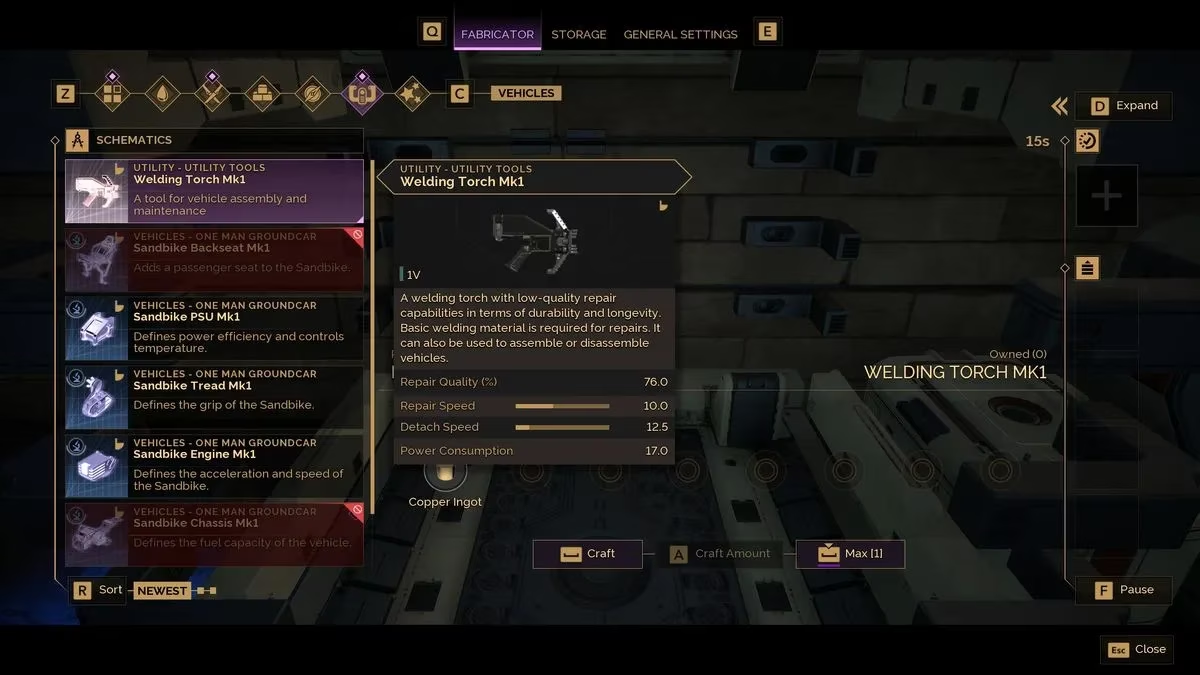
Two additional items are mandatory: a welding torch and a small or medium vehicle fuel cell. The torch is the building tool that allows placement and attachment of the chassis and modules. The fuel cell keeps the bike running, though it degrades with use like a power pack. Fuel cells can be crafted in a small chemical refinery after research and construction, or found in scavenger camps and outposts.
Once the parts are ready, the assembly is straightforward. Players equip the welding torch, place the chassis, and attach each vehicle module until the bike is complete. Interacting with the finished sandbike opens a mini menu; the fuel option fills the tank.
🛠️ Repair and recovery
Damage is inevitable. A trigger-happy scavenger or an unlucky storm can leave a sandbike badly wounded. Repairs require fabricated welding wire. Players equip the welding torch, cycle to the repair function, and hover over each module to inspect health. Clicking welds the damaged section and gradually consumes wire. The catch is that welding wire cannot restore a bike to full health; a red portion remains, so repeated damage leaves a permanent scar.
If the bike is scrapped, players can detach each module into an item using the torch's detach function. Those modules can then be repaired individually at a repair station once it has been researched and built. This is slower than a field weld, but it turns a wreck into a project rather than a loss.
🛡️ Protection and backup
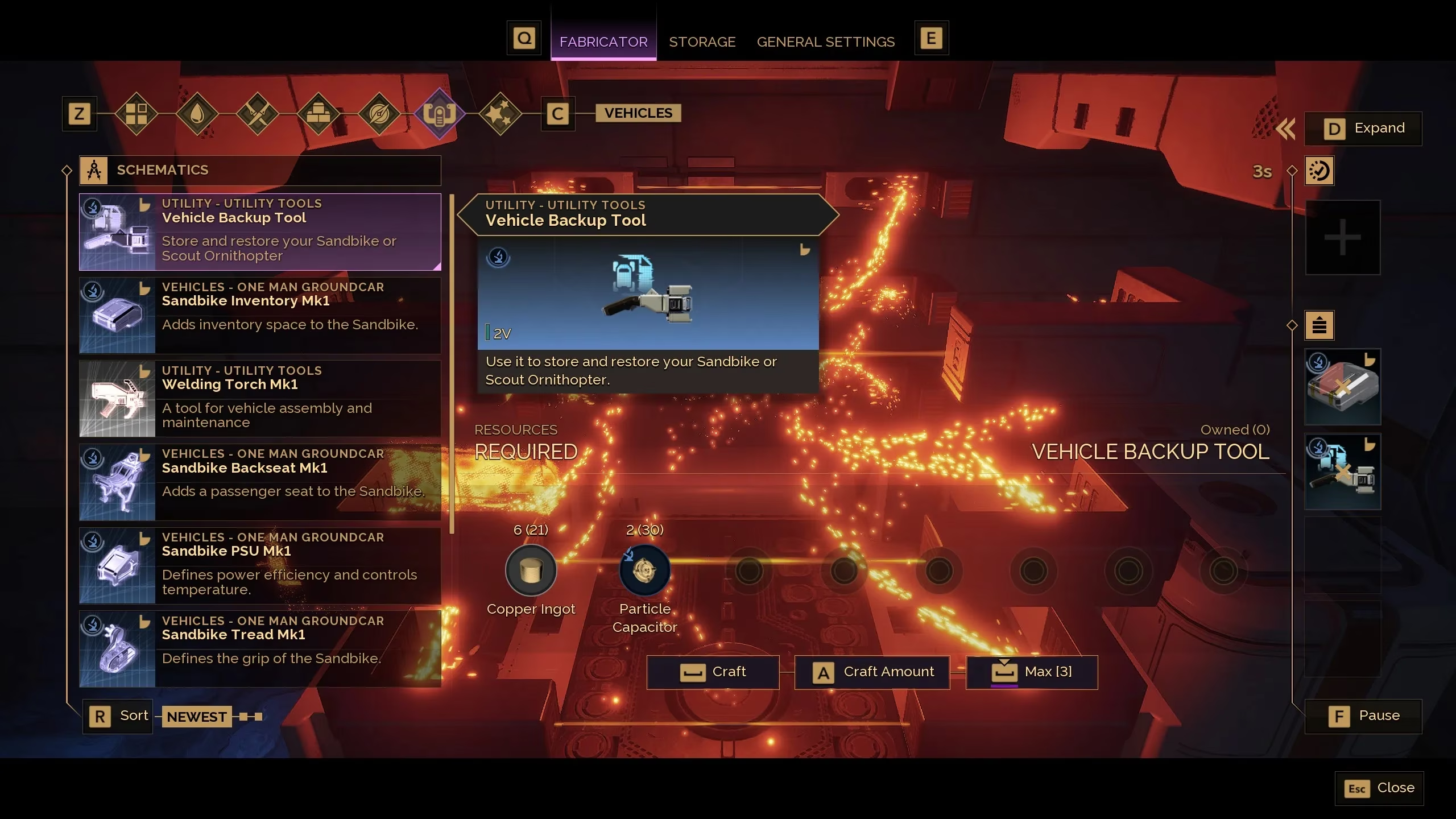
Leaving a sandbike unattended is an invitation. Another player may steal it, or a sandstorm may smash it while the owner is logged out or exploring. There are two main defenses. The first is a garage built inside a base. A powered garage keeps the bike behind a door, protects it from storms, and allows the inventory module to remain attached with its contents. The second is the vehicle backup tool, a spare key forged from paranoia. It stores the bike in the device so it can be restored later. The limitation is that a vehicle cannot be stored with items in its inventory, so any sandbike storage module must be emptied first. The guide notes that even a wrecked bike can be stored and carried back to base.
🏜️ Free replacements and claiming ownership
When players leave Hagga Basin South and cross the sands to northern regions, they may find sandbikes at settlements that can be claimed. At The Anvil in Eastern Vermillius Gap, unclaimed sandbikes have frequently appeared in the sandbike hangar, the space marked with a bike hologram on the east side of the outpost. It is unclear whether these are player vehicles that spawned there or simply abandoned machines. Either way, they offer a practical replacement route. A friend with a second seat module can provide a lift across the sands, or a determined player can make the trip on foot and potentially grab a free sandbike without crafting one.
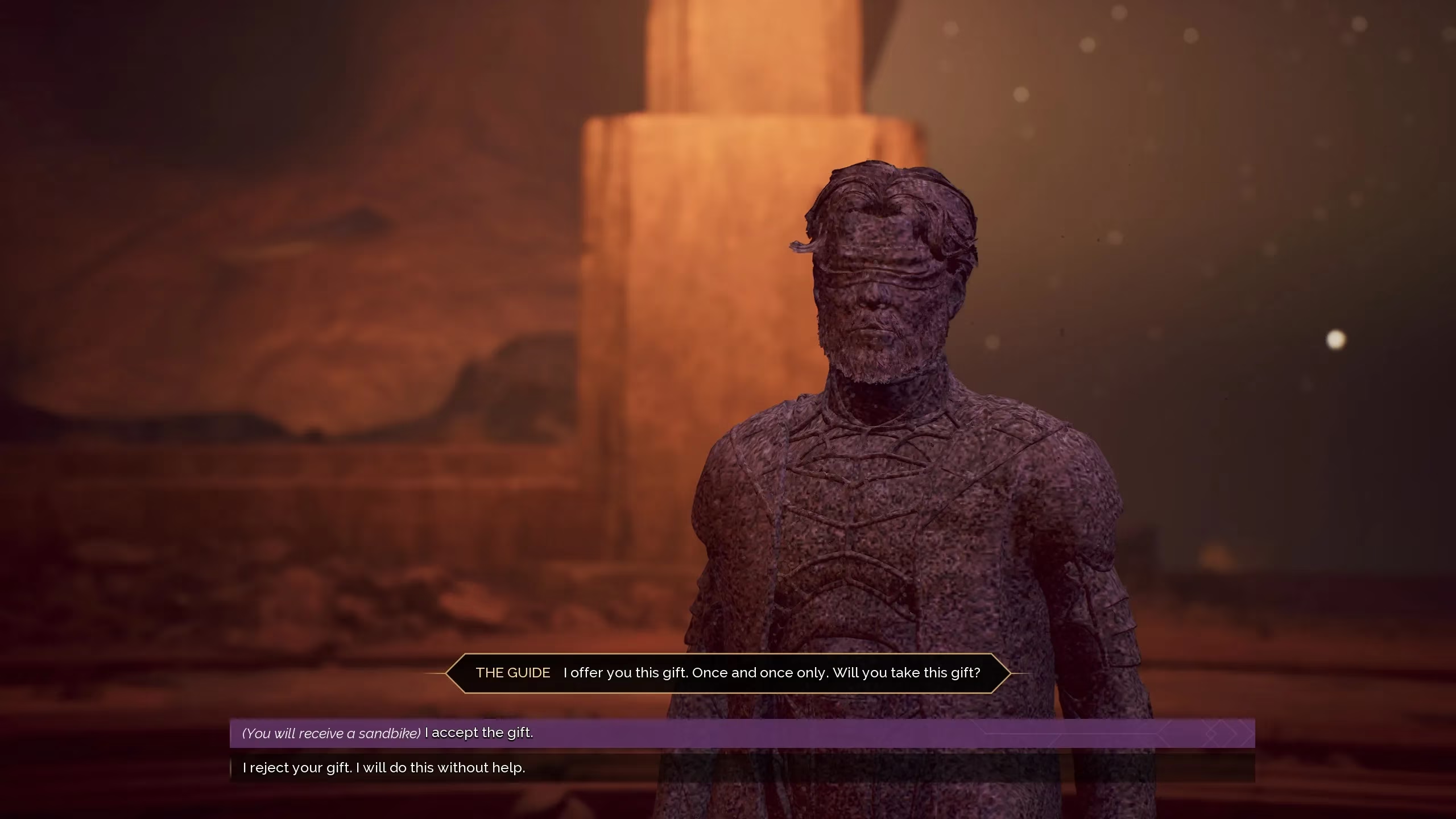
Sandworms remain the great equalizer. If a rider is eaten while on a sandbike, there is a chance The Guide will appear and provide a free replacement. That mercy is not a strategy, but it is a memorable consolation.
In 2026, the sandbike remains one of Dune: Awakening's most important early mobility tools. A garage is a lockbox for a machine that otherwise behaves like a caffeinated jackrabbit in a minefield, and a backup tool is the closest thing to insurance on Arrakis. Players who research early, stock welding wire, and secure their ride will spend less time walking and more time doing what the desert demands: moving before the sand moves first.
The following breakdown is based on Polygon, whose game features and reporting often emphasize how survival systems shape player behavior, a perspective that fits Dune: Awakening's sandbike loop where crafting costs, repair limitations, and the constant risk of storms or theft turn a simple vehicle into a strategic resource rather than a disposable mount.