
Flying Across Arrakis: My First Look at Dune: Awakening’s Connected Servers
Dune: Awakening's connected servers and overland map create a seamless survival MMO where bases, friends, and desert danger feel continuous.
I have never been the kind of player who asks for a second life inside a survival game. I want a clear goal, a fair fight, and maybe a decent view. Then I watched the 30-minute Dune: Awakening Direct, and something shifted. Creative director Joel Bylos did not sell me on sand or spice alone. He sold me on a world stitched together from connected servers, a world where the map itself is a place I can fly through. In 2026, that idea still feels ambitious, and it is exactly the kind of ambition that makes me want to boot up and get lost.
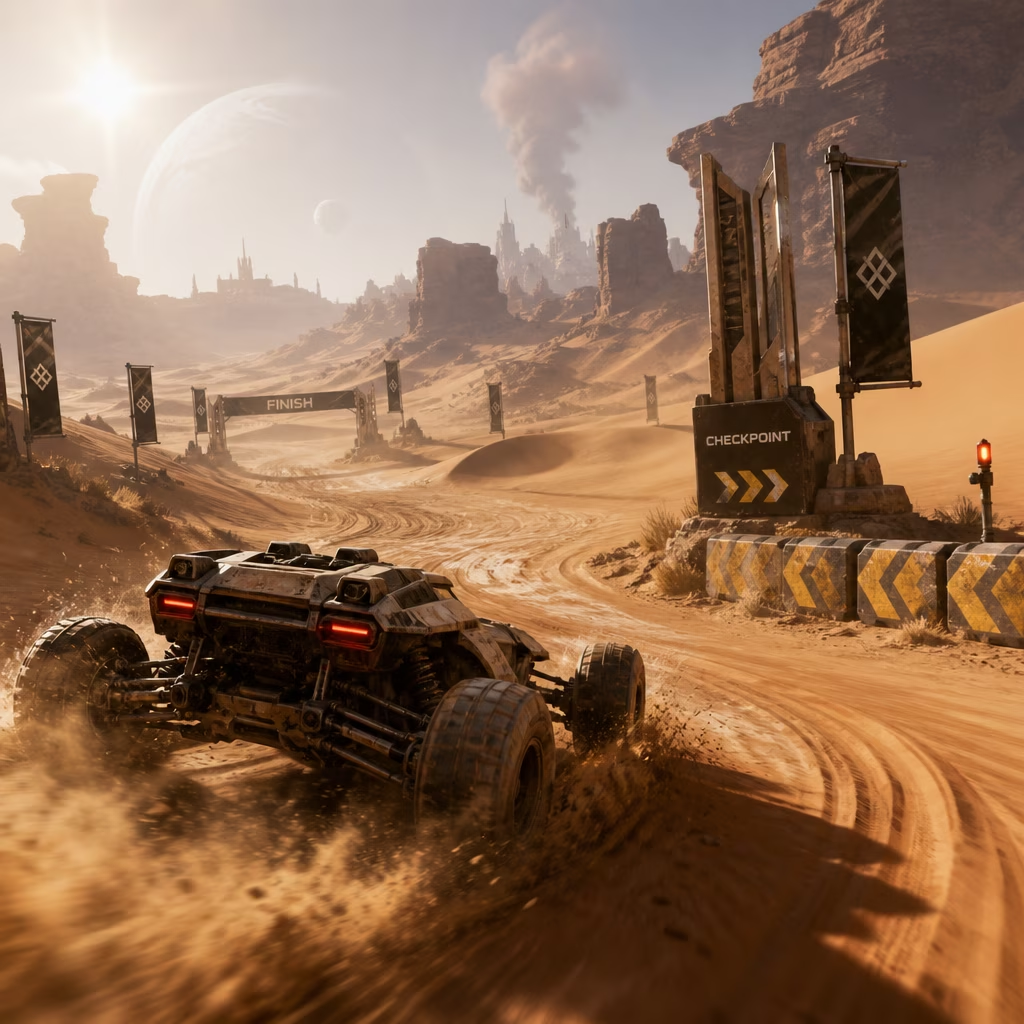
The Direct also covered character creation and the MMO’s alternate timeline, but the part that hooked me was the infrastructure. Bylos described choosing a server like choosing one in an MMORPG, except this is a large infrastructure of connected servers. Most survival games give you one map and one server. Dune: Awakening wants multiple connected servers running in a single world. That sounds like marketing until he explained what it means in practice. It means my base, my friends, the social hubs, and the dangerous desert can all exist in one continuous-feeling journey.
Hagga Basin Is Where I Would Start
My first stop would be Hagga Basin. Bylos called it the starting point, a server with a minimum of 40 other players. That is enough people to make the place feel alive without turning every scavenging run into a crowd. I would build a base, scavenge what I can, and craft until I have something worth defending. The server browser would show me where my friends are playing, so I would not have to guess. For a survival MMO, that small quality-of-life detail matters more than it sounds. 🏜️
I like the idea of starting small. Hagga Basin sounds like the place where I learn the rules: where to find resources, when to run, and which players are likely to help or hunt me. It is the tutorial that does not feel like a tutorial because the world is already full of other people.
The Overland Map Feels Like a Holographic Table
Once I build an ornithopter, the world opens up. Bylos explained that I can physically fly around an overland map with a top-down view. It is another server of its own, one where I can meet hundreds of other players and see all the locations in the world. Instead of clicking an icon and loading into a new region, I fly between locations. That is the detail that makes me lean forward.
It reminds me of the Harkonnen map room scenes in Dune: Part Two, where a holographic topological view of Arrakis shows locations and flight paths. It also reminds me a little of Mount & Blade, where you look down at a representation of yourself and the region as you physically cross the world. The presentation did not show encounters on the overland map, and the UI only showed movement and zoom options. So I am not expecting dogfights there yet. But as a connective tissue between servers, it is a clever idea. It makes travel feel like part of the world rather than a menu.
Social Hubs and Nightclubs
Arrakis is not only danger. The Direct showed social hubs like Harko Village and Arrakeen, where I can find bars, vendors, and the CHOAM exchange. Bylos mentioned peaceful interactions with other players, including dancing at nightclubs. That is the kind of detail that makes an MMO feel like a place instead of a lobby. After a bad run in the desert, I would want a bar, a vendor, and a few minutes of not worrying about sandworms. 🍹
The Deep Desert Is Where the Story Turns Dangerous
The Deep Desert is where the game shows its teeth. That is where PvP, spice mining, and sandworm encounters live. The region is periodically wiped clean and reconfigured by massive sandstorms, which is meant to create competition between players hunting for spice and other resources. I love that design. It prevents one group from owning the same corner forever and gives everyone a reason to scout, race, and risk. It also means the map is not a museum. It is a pressure cooker.
The Server Structure in Plain Terms
| Layer | What I would do | Who I would meet |
|---|---|---|
| Hagga Basin | Build a base, scavenge, craft | At least 40 other players |
| Overland map | Physically fly between locations | Hundreds of players |
| Social hubs | Trade, drink, dance | Peaceful players |
| Deep Desert | PvP, spice mining, sandworm risk | Competitors and opportunists |
Why It Stays With Me
I am not fully convinced yet. A connected-server world can still feel disjointed if the seams show, and the overland map needs to be more than a pretty travel screen. But the vision is clear. Dune: Awakening is trying to make Arrakis feel like a network of places I can actually move through, not a series of loading screens. In 2026, that is the kind of survival MMO I want to see. I want to build in Hagga Basin, fly across the overland map, dance in a nightclub, and then risk everything in the Deep Desert. If Funcom sticks the landing, I will be there.