
Surviving Arrakis: A Complete Guide to Fall Damage and Suspensor Tech in Dune: Awakening
Dune: Awakening fall damage and the Suspensor Belt are vital to surviving Arrakis's perilous terrain and deadly drops—equip wisely for survival!
Navigating the brutal, sun-scorched expanse of Arrakis in Dune: Awakening is a constant battle for survival. Between the ever-present threat of colossal Sandworms and the planet's apocalyptic Coriolis storms, players must manage their water, avoid enemies, and traverse treacherous terrain. Amidst these iconic dangers lurks a more mundane, yet ever-present, threat: fall damage. While the game's vast, open desert might seem flat, its rocky outcrops, deep ravines, and ancient ruins create plenty of opportunities for a painful, and potentially fatal, descent. Understanding how gravity works on this alien world is as crucial as knowing how to avoid a worm's maw.
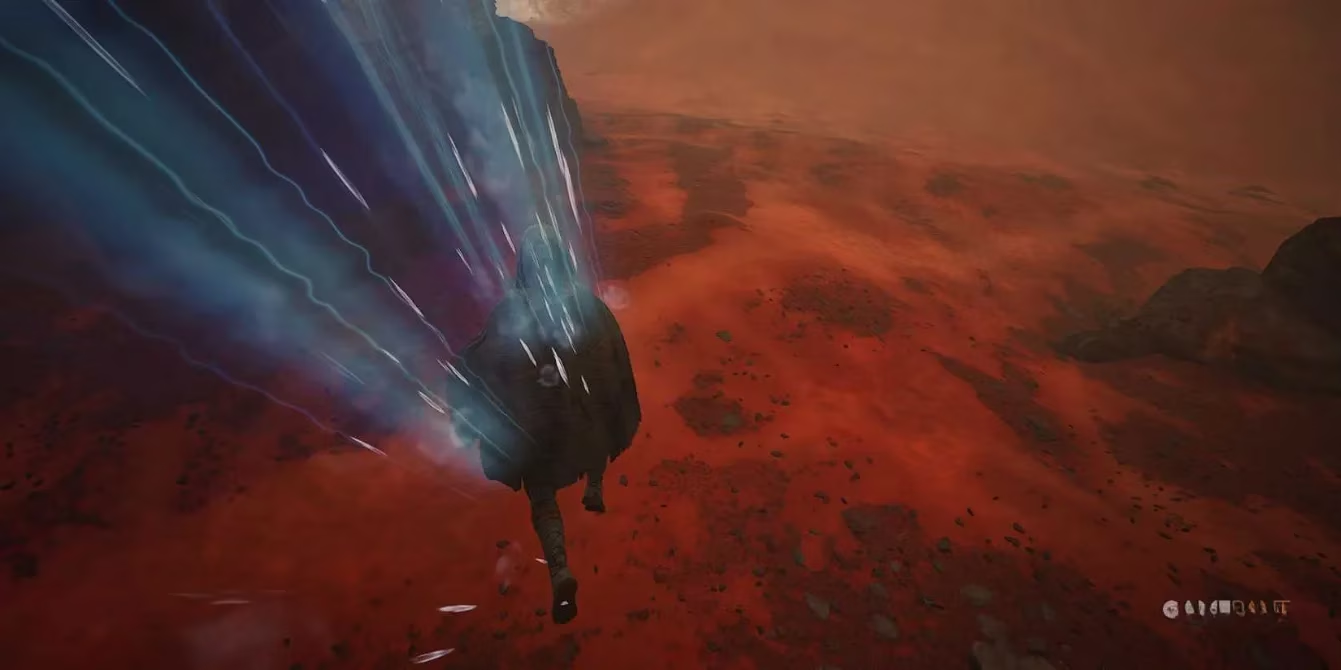
The Reality of Gravity on Arrakis 🪂
Yes, fall damage is very much a thing in Dune: Awakening. Jumping from one of Arrakis's towering rock mesas—often the only high ground available—will chip away at your health. However, the developers have shown a bit of mercy. The damage is rarely instantaneously lethal unless you're already on death's door or attempt a leap of faith from a truly absurd height. Even in the worst-case scenario where a fall reduces your health to zero, the game's mechanics often allow for a self-revive, pulling you back from the brink. But don't get complacent! Being left with a sliver of health in the middle of the desert is a recipe for disaster. It forces you to burn through precious healing items, and if you plummet directly into an enemy camp while downed, that self-revive won't save you from a swift and final end.
Your Best Friend: The Suspensor Belt 🤖
The premier solution to negating gravity's bite is the Suspensor Belt. This piece of tech is your silent guardian, activating automatically when it detects a fall velocity that would result in injury. There's no button to press—it just works, catching you like an invisible safety net woven from pure repulsor energy. Think of it as having a personal, anti-gravity parachute that deploys the moment you step off a cliff.
-
Acquisition: You can find these lifesavers as loot in scavenger camps or other points of interest scattered across the desert.
-
Crafting: For a reliable supply, you can research the schematics and manufacture your own using a Fabricator at your base.
-
Progression: Not all belts are created equal. Through research, you can unlock advanced models with bonus effects, such as:
-
Enhanced jump boosts for better mobility.
-
Improved power efficiency, making them less of a drain on your reserves.
-
Reduced Sandworm attraction, a critical feature for stealthy travel.
-
⚠️ Important Maintenance Note: The Suspensor Belt consumes Power from your suit's Power Pack. Always ensure you have a decent charge before attempting any major descents. Furthermore, like all equipment, it degrades with use and must be repaired at a Repair Station in your base to remain functional. For the Trooper specialization, investing in the Suspensor Training skill tree can significantly enhance your belt's performance, turning a simple safety device into a core mobility tool.
Advanced Maneuvers: Grapples and Fields 🪝
For players who prefer a more active approach to defying gravity, class abilities offer thrilling alternatives.
-
Shigawire Claw (Trooper): This ability is a game-changer, functioning as a rapid-fire grappling hook. If you misjudge a leap and find yourself in freefall, firing the claw at a nearby rock face can yank you upwards, abruptly halting your momentum and preventing damage. It's the difference between a graceful save and a pancake landing.
-
Anti-Gravity Field (Trooper): Another fantastic tool, this ability creates a localized zone that nullifies gravitational pull, allowing for safe descent or creating tactical advantages in combat.
Old-School Survival Tips: The Climb of Shame 🧗
What if you're caught without your Suspensor Belt and your abilities are on cooldown? Sometimes, you have to go back to basics. The environment itself can be your salvation.
If you find yourself in a pickle, try to grab onto any rocky surface or outcrop during your fall by holding the interact button (typically A/Cross or Space). This cling mechanic can stop your fall entirely, letting you either climb down carefully or at least drop from a significantly reduced—and safer—height. It's the video game equivalent of desperately scrambling for a handhold on a sliding slope of sand and stone.
Final Verdict: Is Fall Damage a Major Threat? ⚖️
In the grand, deadly ecosystem of Arrakis, fall damage is more of a persistent nuisance than a primary killer—like a particularly aggressive grain of sand stuck in your stillsuit. It won't end your run as spectacularly as a Sandworm, but it can whittle down your resources and put you in vulnerable positions at the worst possible times. By prioritizing the acquisition and maintenance of a Suspensor Belt and mastering class abilities like the Shigawire Claw, you can effectively remove this concern from your survival checklist. This lets you focus on the true wonders and horrors of the desert: navigating spice blows, engaging in faction warfare, and listening for the telltale rumble that means the ground beneath you is no longer ground at all. In Dune: Awakening, mastering the vertical space is just as important as mastering the horizontal.