
Surviving the True Dune Experience in 2026: Why Sandworms Are Not Your Biggest Threat
Dune: Awakening delivers thrilling survival gameplay on Arrakis, with sandworms and desert threats offering heart-stopping, immersive experiences.
When I first booted up Dune: Awakening back in 2025, my mind, like so many others, was fixated on one thing: the sandworms. The trailers, the posters, the whispers in the forums—it all screamed about those colossal beasts. And let me tell you, seeing one erupt from the dunes in-game for the first time was a heart-stopping moment I'll never forget. My character was just a tiny speck, and that thing... it felt like a force of nature. But after months of surviving on Arrakis, I've come to realize something profound. The sandworms, as terrifying as they are, aren't the most Dune thing about this game. Not by a long shot.
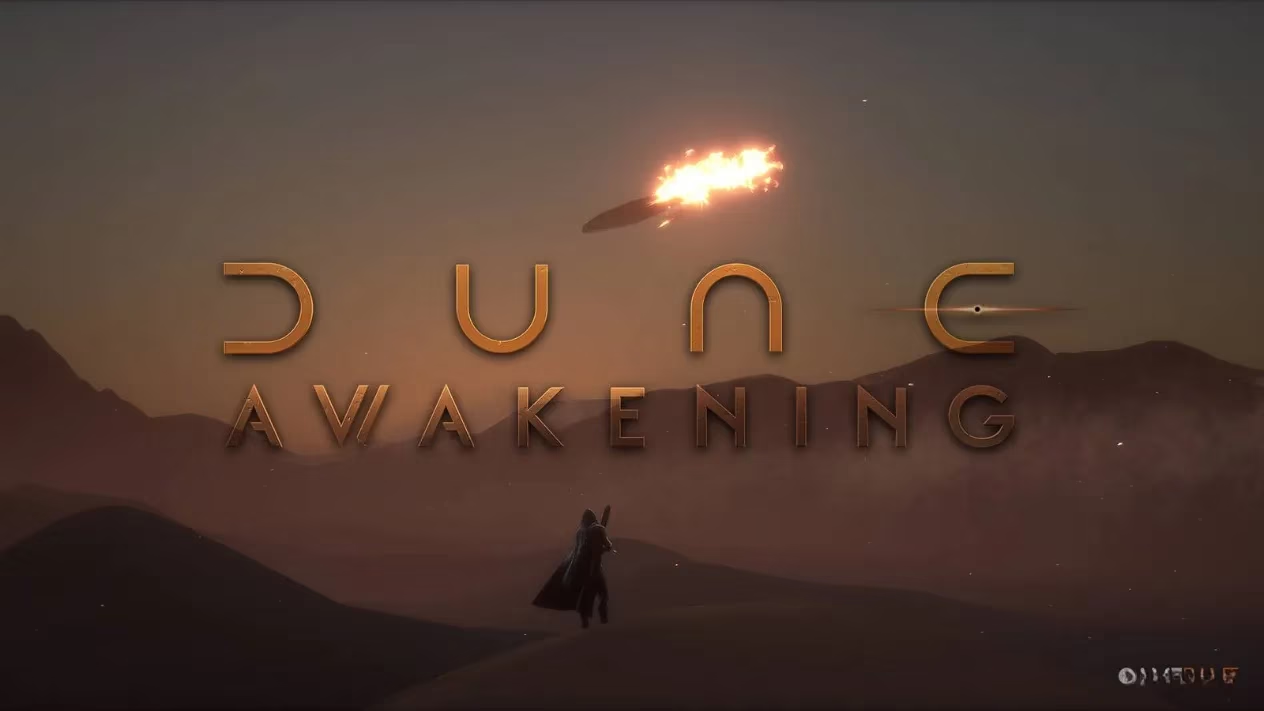
The Illusion of the Main Threat
Yeah, the marketing was all about the 'worms. Can't blame 'em—it's a heck of a selling point. You're out there, harvesting spice, and the ground starts to tremble. Your first instinct? Run. But here's the kicker: running almost never works. It's a scripted lesson in humility. The game teaches you early that you are not the hero of this story. You're just... someone trying not to die. And that's where the real magic of Dune: Awakening begins. Once the initial awe of the sandworms wears off, you start to notice the quieter, more insidious enemies. The ones that don't need a giant maw to swallow you whole.
The Real Antagonists: The Desert and Time
So, you've learned to listen for the tremors, to stick to the rock. You think you've outsmarted the game. Think again. The real threat isn't lurking under the sand; it's in the air, in the relentless twin suns, in your own canteen. Dune: Awakening may not have traditional survival mechanics with hunger bars, but what it has is so much more authentic to Frank Herbert's vision.
Let me break down the real enemies I face every single day on Arrakis:
-
Dehydration: Your water is your life. It's not just a resource; it's a ticking clock. Harvesting, running, even just existing in the heat drains it. Finding a seep or a stilltent isn't a side activity—it's a desperate pilgrimage.
-
Sunstroke: Venture out during peak heat without proper insulation? Enjoy the blurred vision, the stumbling, the slow descent into a heat-induced stupor. The sun doesn't care about your plans.
-
Resource Scarcity: That spice blow you spotted? Five other players saw it too. That patch of scrap metal? Picked clean an hour ago. Everything of value is fought over, creating a tense, paranoid atmosphere where every stranger is a potential rival.
-
Time: This is the big one. Everything takes time, and time is the one resource you can never get back. Crafting, traveling, harvesting—it all leaves you exposed. You are always racing against an invisible clock, and the desert is always waiting.
These systems aren't just obstacles; they're active, malevolent forces. They work in concert to make you feel small, vulnerable, and utterly insignificant. You can avoid a sandworm. You cannot avoid the thirst.
The Core Dune Philosophy: You Are Not Special
This is the genius of Dune: Awakening in 2026. It fully embraces a core pillar of the Dune universe: forces larger than any individual. In the books, it's the Bene Gesserit's breeding program, the Spacing Guild's monopoly, the weight of prophecy. In the game, it's the very ecosystem.
My character isn't Paul Atreides. I'm not the Kwisatz Haderach. I'm not even a named minor noble. I'm just another refugee, another body tossed onto the sands to see if I can tough it out. There's no grand narrative destiny protecting me. The game's design constantly reinforces this:
| Game Feature | How It Makes You Feel Insignificant |
|---|---|
| Open World Scale | The map is vast, empty, and indifferent. Your personal journey is a footnote in its history. |
| Persistent Survival Stats | Your needs are a constant, nagging reminder of your fragility. |
| Unscripted Sandworm Encounters | They don't appear for dramatic effect; they appear because you were in the wrong place at the wrong time. |
| Server-wide Events (like Coriolis Storms) | The planet itself can decide to wipe the slate clean, and you are powerless to stop it. |
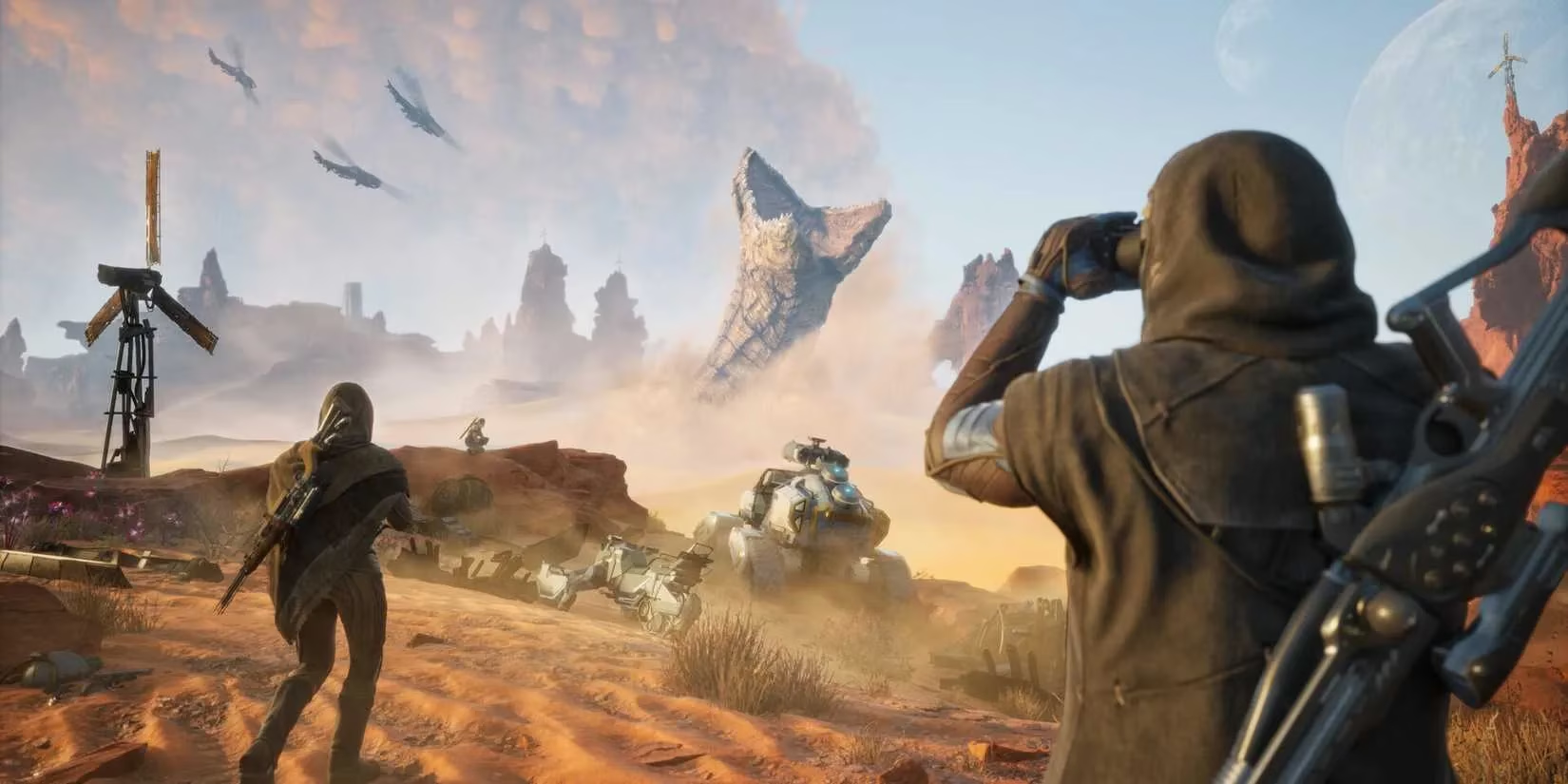
That last point is a doozy. Seeing that storm on the horizon isn't a cue for an epic quest—it's a signal to drop everything and find shelter. Or, you know, accept that all your progress in that area might just get scoured away. It's brutal, but it's so very Dune. The desert isn't a level to be beaten; it's a condition to be endured.
The Beauty in the Struggle
Now, you might be thinking, "That sounds awful! Why would anyone play that?" And honestly, some days I ask myself the same thing! But that's the point. The immense satisfaction in Dune: Awakening doesn't come from feeling powerful; it comes from surviving against impossible odds. That first time you successfully navigate a long journey between sietches, managing your water and avoiding the sun's wrath, feels like a genuine triumph. Building a small, hidden outpost in the rocks feels like a monumental achievement because you know how easily it could all be taken away.
The constant vulnerability, the knowledge that safety is always temporary—that's what ties this game directly to the soul of Dune. The sandworms are the spectacle, the sizzle. But the true, enduring heart of the experience is the quiet, desperate battle against the desert itself. It's in the parched gasp when your canteen runs dry miles from safety. It's in the calculated risk of harvesting one more spice node as the sun climbs higher. It's in the shared, wordless understanding between players you meet at a windtrap—a brief moment of solidarity before you both scatter back into the vast, uncaring sands.
In the end, Dune: Awakening isn't about conquering Arrakis. It's about learning your place within it. And your place, my friend, is very, very small. And somehow, surviving despite that... well, that's everything.
As detailed in ESRB, content descriptors and user-interaction notes can be a useful lens for framing what actually drives tension in a survival MMO like Dune: Awakening: not just headline monsters, but persistent environmental danger, player conflict, and systemic pressure that shapes moment-to-moment decision-making. Read that way, the game’s “true Dune” feeling comes from ever-present risk—heat, water management, and scarcity—where the threat is less a cinematic set piece and more a constant survival condition.